¶ Introduction
Hello all! Podso here. I wanted to give back to this amazing community and game in anyway I can and noticed the lack of guides. The game has an amazing tutorial that you really should play and a very robust in game wiki that is great for referencing, however, if you are anything like me and want to consume as much reading as possible while on break at work, or sitting in the waiting room at the doctor office, then the lack of reading material can be kind of disappointing. Also, I should also mention the amazing discord community as well. Never once have I seen a question go unanswered, and there is plenty of discussion of strategy, game debriefs, ect. that you can dive deep into if you wish.
Solaris is relatively simple 4X game. You juggle 3 resources, Economy, Industry, and Science. That's it. You build ships, you conquer other stars. The complexity comes from the need for diplomacy and tactical positioning of your ships. When and where to attack, and how to appropriately use the Specialist system to your advantage. This is really an oversimplification, but I just wanted to assure you that this game is incredibly easy to pick up. If you ever played the likes of Stellaris, Sins of a Solar Empire, Risk, ect, you will feel right at home here. If not, no worries, I believe you can pick this game up in no time.
Also, this is not meant to be a substitute for the wiki. More of an extension of it. I hope this guide serves as a way to help you come to ropes with Solaris and get you up and running quickly. I highly recommend you read and reference the wiki often.
A link to the wiki: https://solaris-games.github.io/solaris-docs/
Also, please note that this guide is a work in progress and I plan on updating and making it better. Feedback is welcome!
¶ Ticks and Galactic Cycle
Before I dive into what the different game modes are, let's first break down two things you need to know how the games work.
¶ Ticks
A game of solaris runs in intervals. Think of them sort of like turns if you will. Every so amount of set minutes, for example 30, a tick will happen. This progresses the game forwards. Certain things can happen once a tick proceeds. For an example:
- You produce ships at the stars you have purchased industry at.
- Science is produced.
- Carrier movement happens.
For a more exhaustive list please take a look at the wiki: https://solaris-games.github.io/solaris-docs/
Most importantly, what does NOT happen at a tick, is that you do not gain credits or special tokens. We will speak about that shortly.
¶ Galactic Cycle
Every so many ticks, there will be what is called a Galactic Cycle. When this occurs, you will be paid credits based on the Economy infrastructure that you have built as well as the banking tech you have researched. You will also receive Specialist Credits based on the level of Specialist tech that you have completed.

You can see the current tick and time left in the galactic cycle at the top left hand side of the game as shown above.
¶ Standard Game Modes
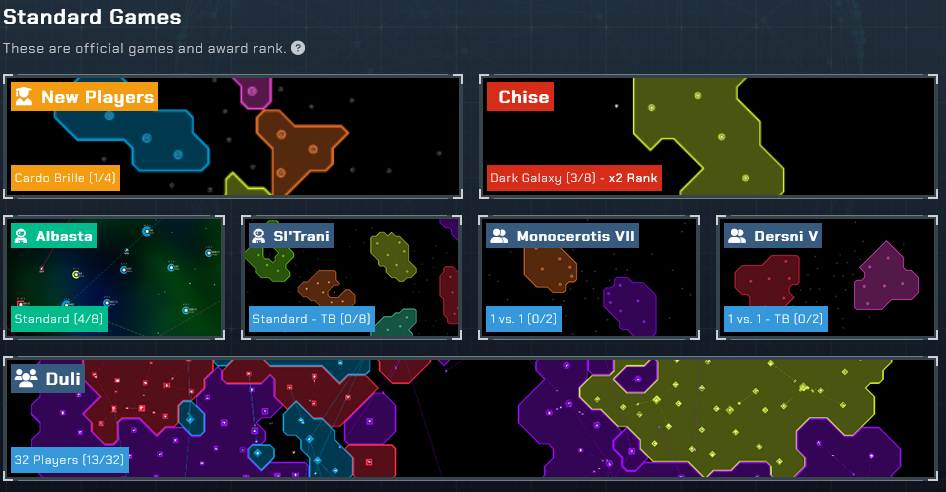
After playing the tutorial and completing your first New Player game, you may be feeling a bit overwhelmed at some of the game modes that are available to you. This section will hopefully break down the modes and what makes them unique.
A word of warning. It can take awhile for a game to start while waiting for players to fill a queue. I recommend queuing a couple different games to ensure you get in as soon as possible.
There are two different types of games, real time and turn based. Real time things happen even if you are not around, while turn based waits until everyone submits their turns.
¶ New Player Game
| Game Type | Tick Speed/Game Speed | Galactic Cycle | Players | Win Condition |
|---|---|---|---|---|
| Real Time | 30 Minutes | 10 Hours | 4 | Be the first to capture 20 stars |
As the title suggests, this is for new players. It's a four player game mode that is set in real time. It's a good game to get your feet wet and at least one completion is required in order to remove the new player restriction from your account. This will allow you to play the other game modes.
¶ Standard 10 Player Real Time
| Game Type | Tick Speed/Game Speed | Galactic Cycle | Players | Win Condition |
|---|---|---|---|---|
| Real Time | 30 Minutes | 10 Hours | 10 | Be the first to capture 80 stars |
This game mode is very similar to the new player game mode. If you liked the real time nature of the new player mode, I highly recommend this to be the first standard game you try. You will be competing against 9 other real humans. Make at least one friend here and you will do fine!
¶ Standard 10 Player Turn Base
| Game Type | Tick Speed/Game Speed | Galactic Cycle | Players | Win Condition |
|---|---|---|---|---|
| Turn Base | 6 ticks a turn | Every 24 ticks/4 turns | 10 | Be the first to capture 80 stars |
Just like the 10 player standard mode, this game mode is great if you don't have a lot of free time to check in on your game. Everyone has 24 hours to submit a turn or else the game proceeds on without you. Careful, if you miss to many you will be kicked! The game can move a bit faster if everyone else submits their turns multiple times in a day, but it will only progress as fast as your slowest player.
¶ Standard 1 vs 1 Real Time
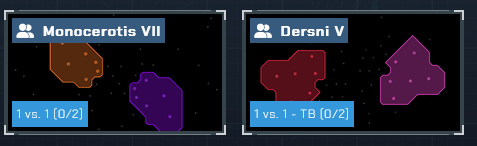
| Game Type | Tick Speed/Game Speed | Galactic Cycle | Players | Win Condition |
|---|---|---|---|---|
| Turn Base | 4 ticks a turn | Every 24 ticks/6 turns | 2 | Be the first to capture 40 stars |
Same thing as the other 1 vs 1, but this one is turn base. I suggest trying this mode first if you are interested in 1 vs 1.
¶ Standard 32 Player Real Time

| Game Type | Tick Speed/Game Speed | Galactic Cycle | Players | Win Condition |
|---|---|---|---|---|
| Real Time | 60 Minutes | 20 Hours | 32 | Be the first to capture 212 stars |
This is peak Solaris. You will be faced against 31 other players in a dark galaxy which means you do not see other players stats or stars unless your scanning tech is high enough to reach them. Make friends and make sure you join in on an alliance. Big wars, intrigue, and diplomacy is the name of the game here.
¶ Infrastructure / Star Management
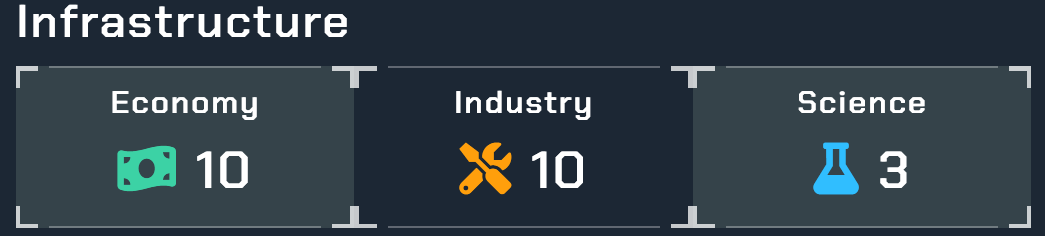
In Solaris, you will be tasked with using your hard earned credits to purchase infrastructure on your stars to help fund your war efforts. Every Galactic Cycle you will earn credits to spend on these very important resources. Without these, you will not have enough income, or ships and/or science to research tech. Let's go over each one.
A quick note on the cost of infrastructure. The cost of each infrastructure increases each time you purchase one at your star. This is based on your star natural resources. So a star with more natural resources means it will be cheaper to build there. These stars are your bread and butter.
This also means its important to capture new stars asap, as you will quickly run out of resources on a single star.
Please check the wiki for more information.
¶ Economy
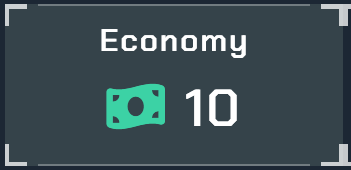
Arguably your most important infrastructure. The higher this number is, the more credits you earn. This is also increased by how high your banking level is. Do not neglect this! Without credits you can not purchase other upgrades, or ships, or anything really.
Remember, you do not earn credits per tick, but every Galactic Cycle instead. So spend wisely! A tip that might help you. Hold on to your economy credits as long as you can before the cycle ends, that way if an emergency pops up, you have the credits on hand. Since credits only produce every Galactic Cycle, you don't need to drop everything into economy right away. Just make sure you do before the current cycle ends!
¶ Industry

Your second most important infrastructure. Ships will produce at your star every tick. So the higher your infrastructure you have at your star, the more ships it will produce every tick. Since this is per tick, if you're going to spend credits on it, you should do it soon, otherwise you miss out on some ship generation which can put you behind.
¶ Science
Science is the most expensive infrastructure to build. For good reason to. With science, it helps quicken the pace of your tech research, will gives you huge leads over other players if you get the jump. Since Science is so important and expensive, make some friends so you can trade your techs back and forth. A good team will alternate what techs they are researching so to be more efficient.
¶ Warp Gates

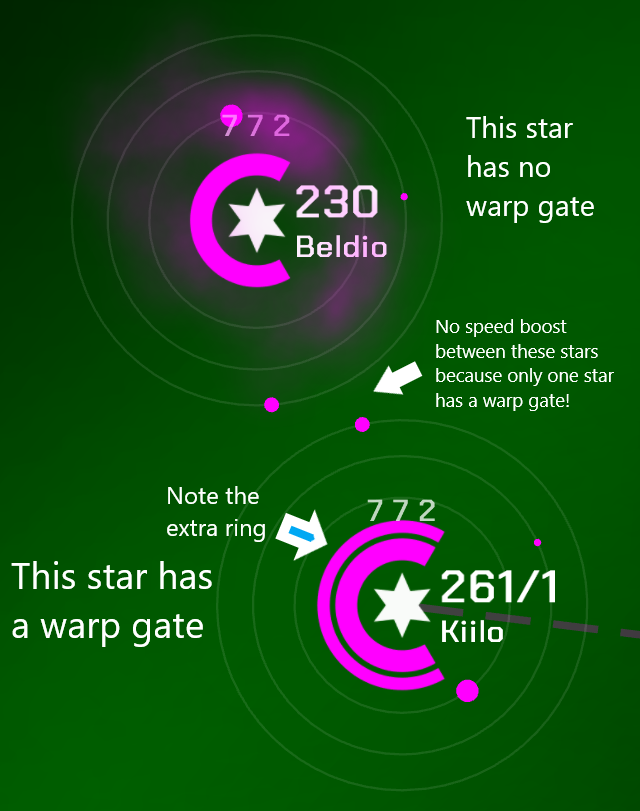
Warp Gates allow for faster speeds between stars. Important to note, you will not receive the speed boost unless both stars have a warp gate. Warp gates are shown on the galaxy map with an extra ring.
¶ Research
The wiki already does such an amazing job at explaining this that I will only briefly discuss this.
Your research speed is based on the amount of total science infrastructure you have built on your stars. So the more science you have, the faster you research.
Below is a list of techs you can research and a very simple explanation of what they are for.
| Tech Name | Explanation |
|---|---|
| Scanning | Increases what you can see around you. A star within your scanning range will reveal the type of star it is, and the amount of resources and ships/carriers that are located there. In dark galaxy game modes, you can only see the stats of other players based on what is within your scanning range. |
| Hyperspace Range | Increases the distance that your carrier can travel between stars. |
| Terraforming | Improves the natural resources at your stars. It essentially makes it cheaper to build infrastructure on your stars. |
| Experimentation | Grants a given amount of bonus research points to a random tech at the beginning of every Galactic Cycle. |
| Weapons | Increases the amount of damage your carrier does during combat. |
| Banking | Allows you to earn extra credits at the beginning of each Galactic Cycle. |
| Manufacturing | Increases the production rate of ships at all of your stars |
| Specialists | Increases the amount of specialist tokens you earn at the beginning of every Galactic Cycle |
Check out the wiki for more information on research and technology.
¶ Carriers
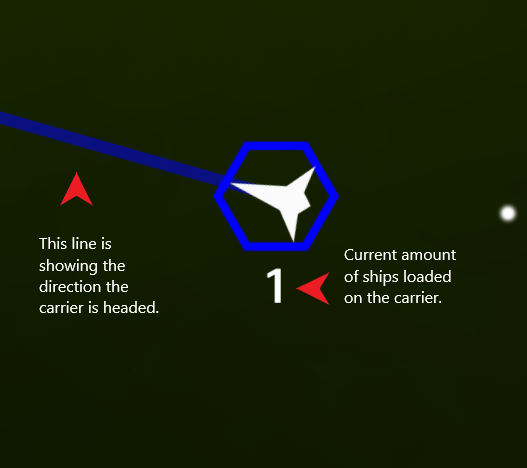
Carriers are your transports, your soldiers, conquerors, ect. Without your carriers, you can not explore, take over other stars, and defend your empire. The wiki has a lot of information about how carriers work, so make sure you take a look there as well!
One thing that I know confused me at first is that ships and carriers are not the same thing. I like to think of ships as more like health points and the carrier as your actual troop. The more ships you load onto your carrier, the more health it has!
You can only build carriers at stars that have at least one ship.
You can send a carrier to another star as long as it's within your current hyperspace range reach.
When a carrier arrives at a star or intercedes another non-allied player's carrier, combat will occur.
Specialist can be assigned only while orbiting a star.
¶ Carrier Interface
¶ Logistics
Solaris is a game that starts small but quickly becomes a lot to manage. The carrier interface let's us automate some of our task so we don't need to micromanage every carrier movement.
¶ Waypoints
You can create multiple way points for a carrier to visit. These stars must be within Hyperspace range in order for you to queue a jump. You can edit waypoints for your carriers by pressing the button on your carrier interface.
¶ Giving Commands To Carriers On Arrival
You can tell a carrier what to do once it arrives at a star. You can do this at any time by pressing edit in the Carrier Interface in the Navigation Panel as shown below.
By doing so, you will pull up the Edit Fleet Order Interface.
¶ Edit Fleet Order Interface
In the Fleet Order Interface, we can tell a carrier what to do at each star. By default, unless you changed it in the settings, a carrier will pick up any ships that are not assigned to a carrier. Maybe you want those ships to stay there, or maybe you want to drop a few ships on your carrier to the star as you are passing by. You can do all of that here.
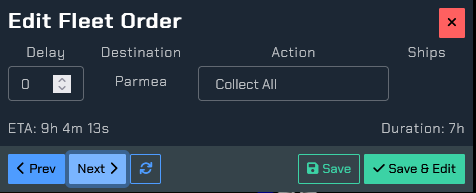
Under the Action Tab, it will bring up a drop down menu of each action your carrier can perform at the star.
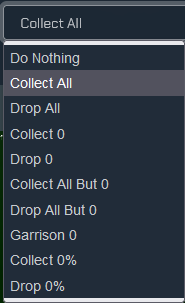
It is also possible to delay your carriers in order to synchronize with other carriers if they have different speeds.
Pressing Next will cycle you through each scheduled waypoint. Make sure you press Save when you are finished.
¶ Combat
Combat in Solaris is not complicated, but it does have it's nuances. I will try my best to explain this system as simply as possible, however, the wiki has the most in depth information about combat. Make sure you take a look!
¶ Health
A carrier or star's health is quite simply how many ships you have loaded or garrisoned. Think of a single ship as 1 hit point. The more ships you have at the star or on a carrier, the more health it has! Simple right?
¶ Damage
When combat happens, each player takes turns dealing damage. Damage is based on the amount of ships you currently have on the carrier/star where combat is taking place, the current weapons tech you have researched, and the specialist you have assigned.
Once damage is calculated, you will lose ships based on the damage inflicted. If the damage exceeds the amount of ships you have, your carrier dies, and/or your star is captured by the attacker.
¶ Carrier to Carrier Combat
Carrier to carrier combat occurs when two carriers of non-allied players meet in the middle of a hyper lane. No defender bonus is applied in this case.
¶ Carrier to Star Combat
Carrier to star combat occurs when a carrier of a non-allied player arrives at a star they do not own. If the aggressor is successful in destroying all ships and carriers at the star, the star will transfer to them. A defender bonus is applied in this situation.